Rear Delt Fly
Stronger shoulders. Better posture.
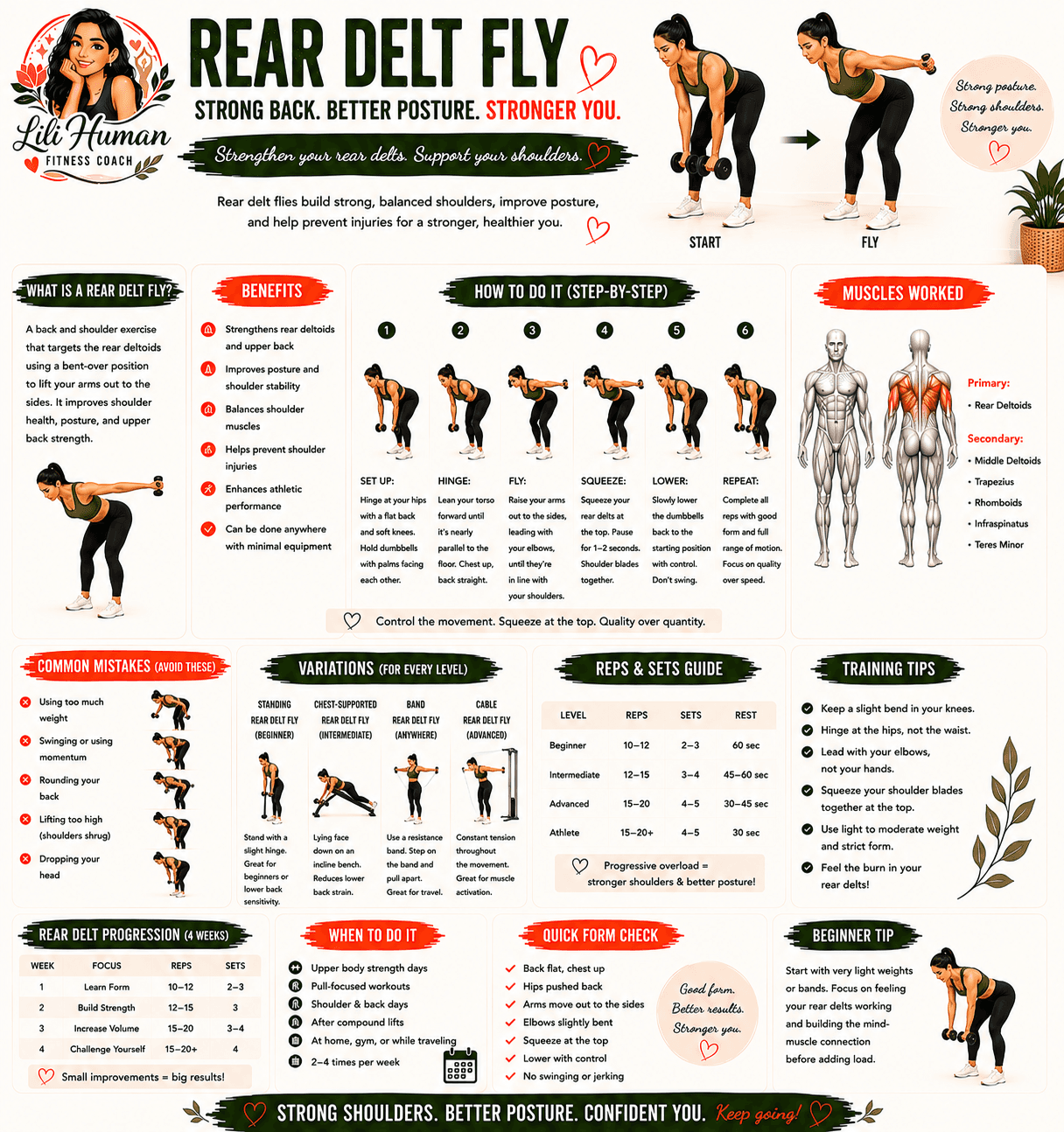
A move that isolates the back of your shoulders by lifting weights out to the sides while hinged forward. It builds balanced, healthy shoulders and improves posture by strengthening the muscles that pull you upright.
Benefits
- Strengthens rear shoulders
- Improves posture
- Builds a stronger upper back
- Boosts shoulder stability
- Balances out pushing exercises
- Works with light dumbbells or a band
Muscles worked
Rear Delts Upper Back (Rhomboids & Traps) Rotator Cuff
Step by step
1
Set up
Hold a light dumbbell in each hand and hinge forward from your hips with a flat back, arms hanging down.
2
Fly
With a soft bend in your elbows, raise the weights out to your sides until they reach shoulder height.
3
Squeeze
Squeeze your shoulder blades together at the top, leading with your pinkies.
4
Lower
Lower the weights back down with control. Repeat.
Tips for best form
Do it right.
- Hinge forward with a flat back
- Keep a soft, fixed bend in your elbows
- Lift out to the sides, not up toward your head
- Squeeze your shoulder blades at the top
- Use light weight and control
Find your version
1. Seated Rear Delt FlyBeginner
- Chest on thighs
- Extra support
2. Bent-Over Rear Delt FlyIntermediate
- Standing hinge
- Standard version
3. Band Rear Delt FlyAll levels
- Use a band instead
- Smooth tension
Common mistakes to avoid
- Using too much weight
- Swinging with momentum
- Shrugging your shoulders
- Rounding your back
How much, how often
| Level | Reps | Sets | Rest |
|---|---|---|---|
| Beginner | 12–15 | 2–3 | 45 sec |
| Intermediate | 15–20 | 3–4 | 30–45 sec |
| Advanced | 20+ | 3–4 | 30 sec |
Tips for best results
- Go lighter than you think — form first
- Lead with your pinkies, not your thumbs
- Squeeze your shoulder blades at the top
- Keep the movement slow and controlled
- Great for posture and shoulder health