Inverted Row
Stronger back. Better pulling power.
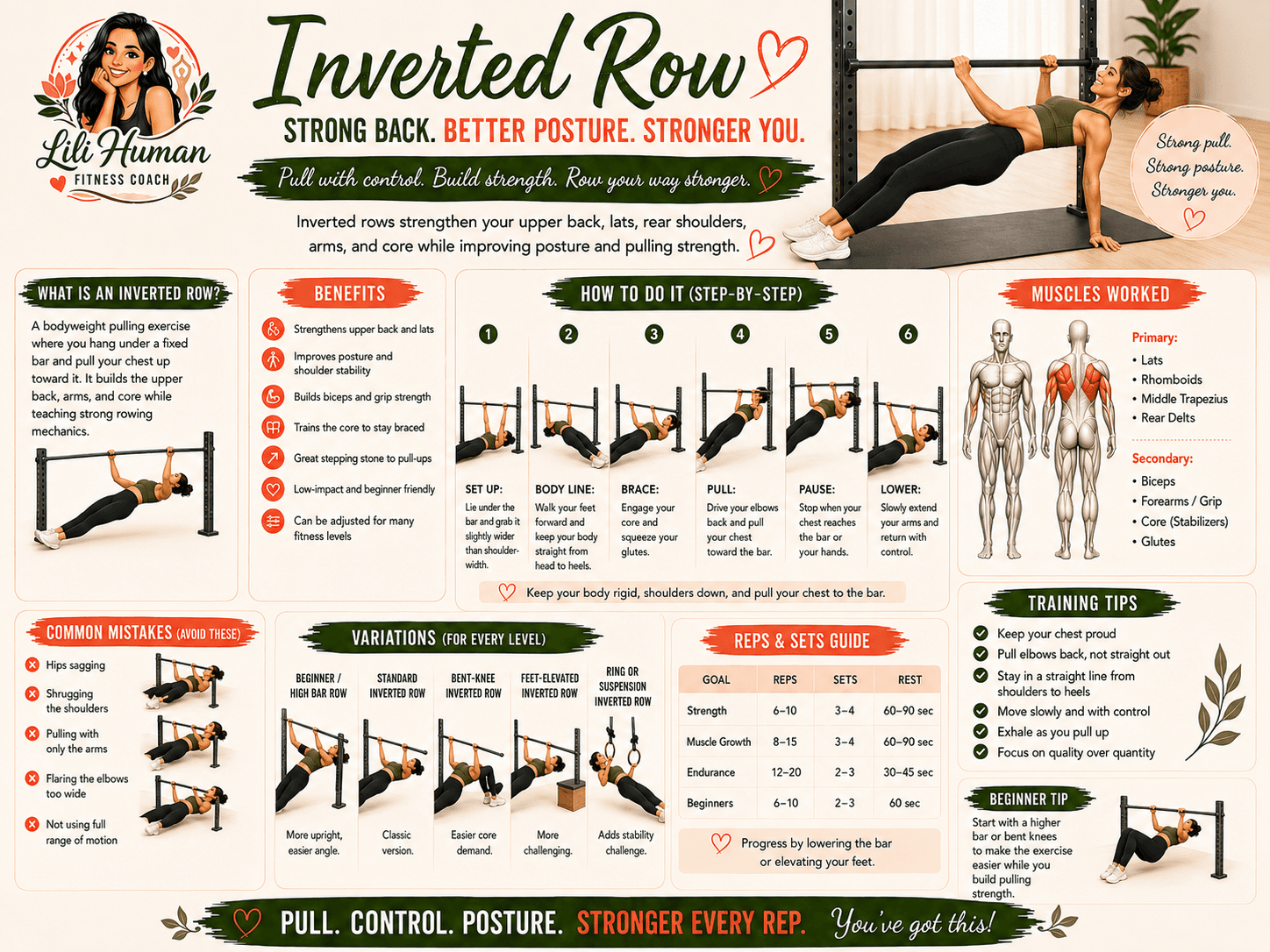
A bodyweight pulling exercise where you lie under a bar and pull your chest up to it. It builds back and arm strength and is one of the best ways to work toward your first pull-up — with the difficulty easily adjustable.
Benefits
- Builds back strength
- Tones and strengthens your arms
- Improves posture
- Boosts upper-body stability
- A great step toward pull-ups
- Difficulty adjusts to your level
Muscles worked
Back (Lats) Rhomboids & Mid-Back Biceps Rear Delts Core
Step by step
1
Set up
Set a bar at about waist height. Lie underneath and grip it slightly wider than shoulder-width, arms extended.
2
Brace
Straighten your body into a plank from head to heels, core and glutes engaged.
3
Pull
Pull your chest up toward the bar, driving your elbows down and back.
4
Lower
Lower yourself back down with control until your arms are extended. Repeat.
Tips for best form
Do it right.
- Keep your body in a straight line
- Pull your chest to the bar, not your chin
- Squeeze your shoulder blades together
- Keep your core and glutes engaged
- Lower with control
Find your version
1. High-Bar Inverted RowBeginner
- More upright angle
- Easier
2. Standard Inverted RowIntermediate
- Bar around waist height
- Standard version
3. Feet-Elevated Inverted RowAdvanced
- Feet raised
- More bodyweight load
Common mistakes to avoid
- Hips sagging or piking
- Not pulling all the way up
- Flaring elbows wide
- Using momentum
How much, how often
| Level | Reps | Sets | Rest |
|---|---|---|---|
| Beginner | 6–10 | 2–3 | 60 sec |
| Intermediate | 10–15 | 3–4 | 45–60 sec |
| Advanced | 15+ (feet elevated) | 4 | 45 sec |
Tips for best results
- Raise the bar to make it easier, lower it to make it harder
- Keep your body in one straight line
- Squeeze your shoulder blades at the top
- Control the lowering phase
- A great pull-up progression