Biceps Curl
Stronger biceps. Stronger you.
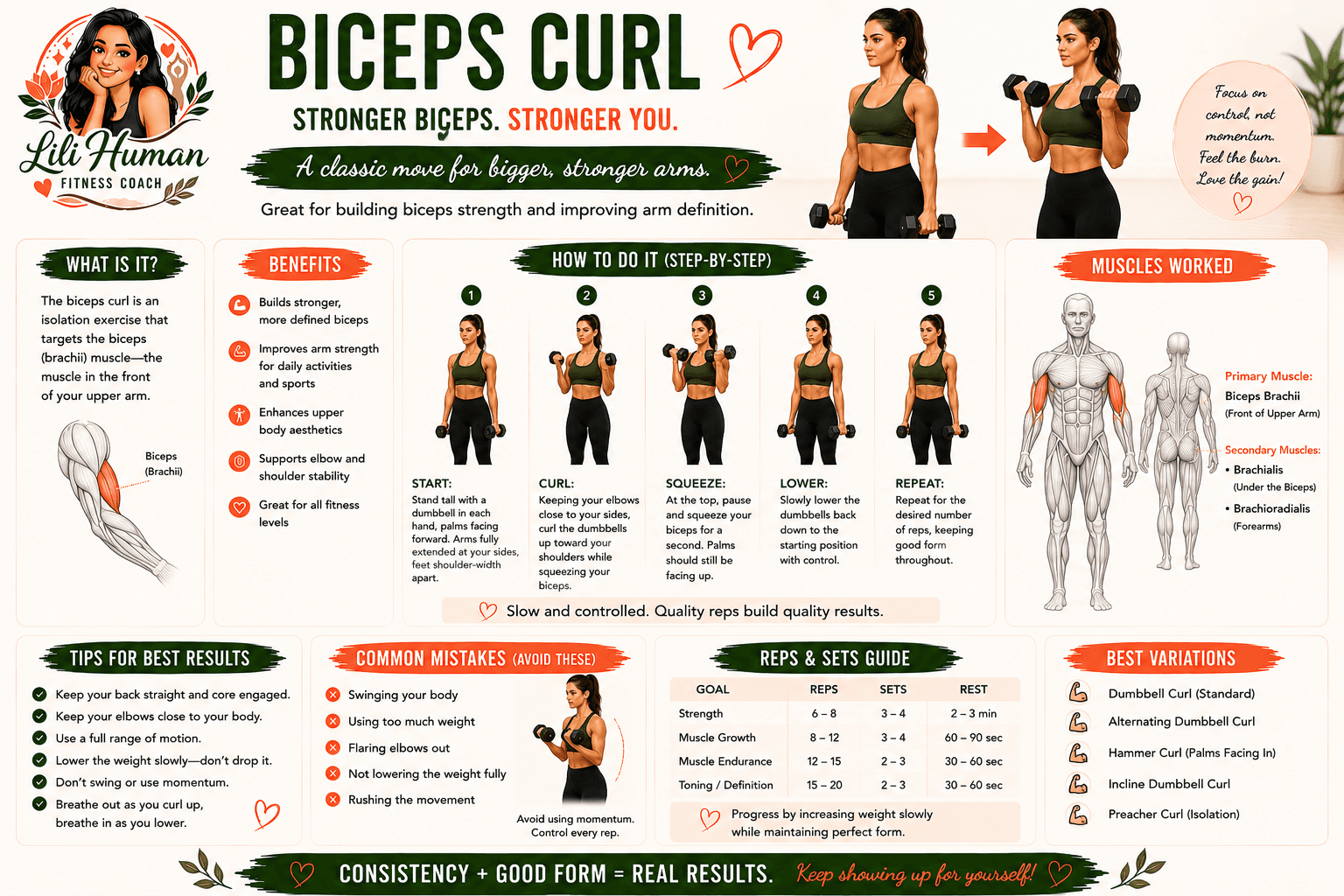
A classic move for bigger, stronger arms. Great for building biceps strength and improving arm definition. The biceps curl is an isolation exercise that targets the biceps (brachii) muscle — the muscle in the front of your upper arm.
Benefits
- Builds stronger, more defined biceps
- Improves arm strength for daily activities and sports
- Enhances upper body aesthetics
- Supports elbow and shoulder stability
- Great for all fitness levels
Muscles worked
Step by step
Start
Stand tall with a dumbbell in each hand, palms facing forward. Arms fully extended at your sides, feet shoulder-width apart.
Curl
Keeping your elbows close to your sides, curl the dumbbells up toward your shoulders while squeezing your biceps.
Squeeze
At the top, pause and squeeze your biceps for a second. Palms should still be facing up.
Lower
Slowly lower the dumbbells back down to the starting position with control.
Repeat
Repeat for the desired number of reps, keeping good form throughout.
Find your version
- The standard curl
- One arm at a time
- Palms facing in
- Targets the brachialis
- Greater stretch on the biceps
- Isolation
- Strict form
Common mistakes to avoid
- Swinging your body
- Using too much weight
- Flaring elbows out
- Not lowering the weight fully
- Rushing the movement
How much, how often
| Goal | Reps | Sets | Rest |
|---|---|---|---|
| Strength | 6–8 | 3–4 | 2–3 min |
| Muscle growth | 8–12 | 3–4 | 60–90 sec |
| Muscle endurance | 12–15 | 2–3 | 30–60 sec |
| Toning / definition | 15–20 | 2–3 | 30–60 sec |
Progress by increasing weight slowly while maintaining perfect form.
Tips for best results
- Keep your back straight and core engaged
- Keep your elbows close to your body
- Use a full range of motion
- Lower the weight slowly — don't drop it
- Don't swing or use momentum
- Breathe out as you curl up, breathe in as you lower