Fitness
Ads for Abs
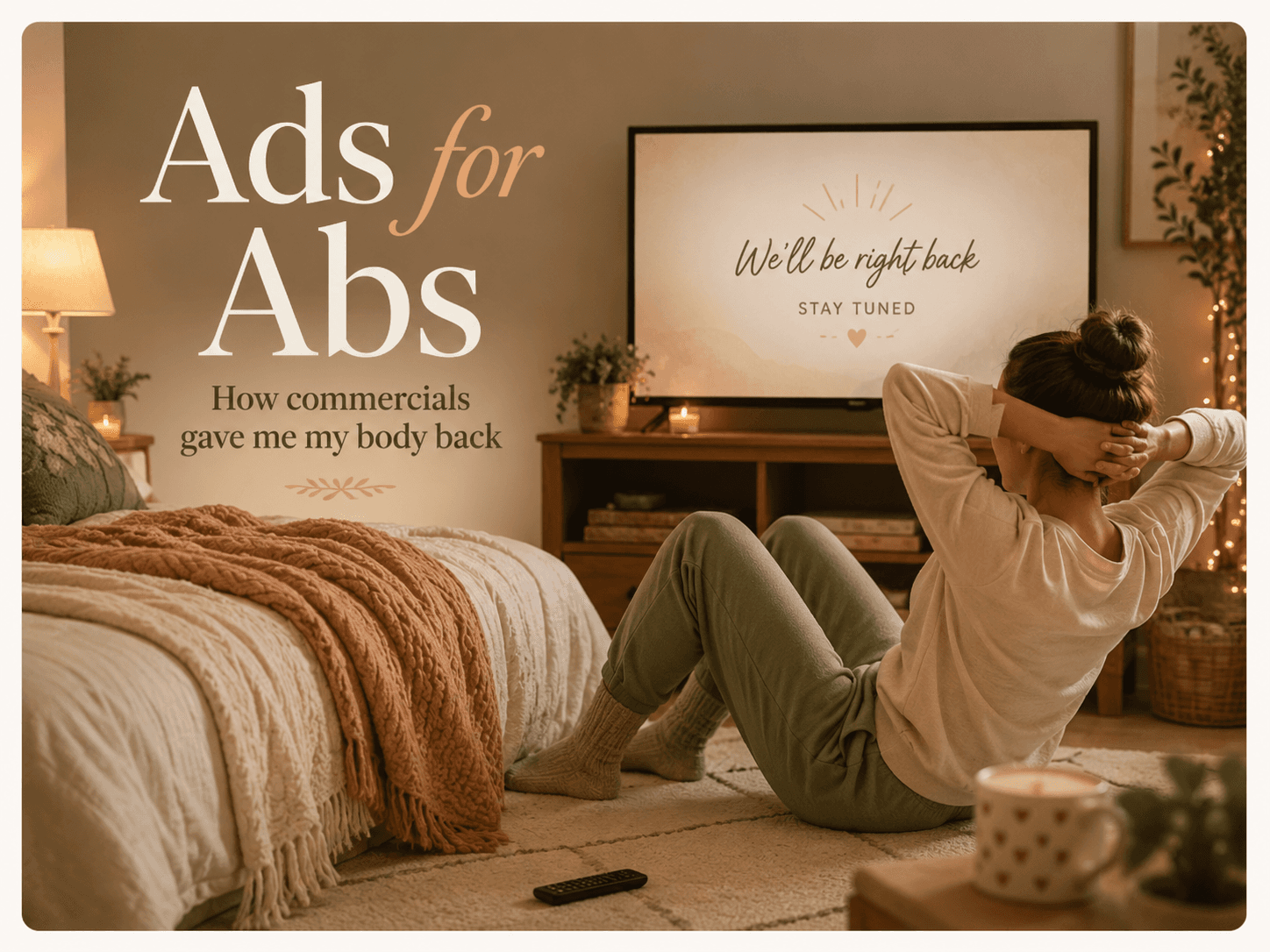
It started, as most of my better ideas do, as a way to save a little money.
Our streaming bills had quietly crept up the way streaming bills do — a dollar here, a "we've updated our plans" email there — until one evening I sat down to do the unglamorous math. The plan, at first, was ruthless: cancel almost everything and just pay for one channel at a time. Watch what we wanted on that one, cancel it, move to the next. Why keep paying for four or five services we weren't really using enough to justify?
It was a good plan for about a day. Because then we remembered we are three different people with three completely different ideas of a good time. Jurie wants one thing, I want another, and Nico has strong, non-negotiable opinions about exactly which talking animals he'll accept. Rotating one channel at a time meant somebody was always waiting their turn. That's not a household. That's a hostage negotiation.
So I went looking for a middle path — and found it hiding in a setting I'd been ignoring for years. If we switched to the ad-supported versions of our channels, we could keep all of them and still come out ten dollars ahead. More television, more choice, less money. One small, dignified sacrifice: we'd have to watch commercials again.
I clicked yes fully expecting to regret it. Instead, I fell a little in love.
A confession about the abs
I should tell you where the title comes from, because it isn't just a joke. Well — it's mostly a joke. But underneath it is a true thing.
When Jurie and I were teenagers, back when television still came with commercials whether you liked it or not, we both — separately, in our own homes, years before we ever met — had the exact same ritual. The second an ad break started, we'd drop to the floor and do crunches until the show came back. Every break, every night. It was mindless. It was automatic. And it worked absurdly well: we both had, if I may say so, genuinely excellent abs. Not gym abs. Commercial-break abs. Built two minutes at a time, several times an hour, without ever once calling it a workout.
Then two things happened. Streaming arrived and quietly deleted the commercial break. And, less quietly, we got older. The floor got farther away. And somewhere in there, the abs packed a bag and left without a forwarding address.
So when the ads came back into our living room after all these years, we looked at each other and started laughing, because we were both thinking the same ridiculous, hopeful thing: wait. Do we get to try again?
The return of the interruption
The first ad break caught me off guard. I'd forgotten the feeling entirely — that abrupt little seam in the middle of a show, the story pausing to let a car drive meaningfully down a coastline while a voice told me about auto insurance. My first instinct was mild annoyance. My second, arriving about four seconds later, was something I hadn't felt in years: oh — I can get up.
So I got up. (In the interest of full honesty: I do most of my watching in bed, not artfully draped across a couch. So "getting up" is less a cinematic rise and more an ungraceful roll toward the edge of the mattress. The principle holds regardless of the furniture.)
I went to the bathroom without pausing anything, without missing a line, without that faint low-grade anxiety of freezing a show mid-sentence. I refilled my water. I did a lazy stretch that turned into a slightly less lazy one. And by the time the show came back, I was standing in my own room feeling, absurdly, like a person who had just been handed a small gift.
What the binge era quietly took
Here's the thing I hadn't let myself notice until the ads gave it back to me: somewhere in the golden, frictionless age of streaming, I had stopped getting up.
When one episode dissolves seamlessly into the next — no break, no seam, no natural place to stand — you simply don't stand. You sink a little deeper into the pillows. Two hours pass in a single unbroken stream, and the only thing that ever interrupts you is that faintly judgmental Are you still watching? — which, let's be honest, is not an invitation to move. It's an accusation. It doesn't say stretch your legs. It says look what's become of you.
The old rhythm of television had pauses built right into it, and we never thanked them for it because we were too busy resenting them. But those commercial breaks were tiny, enforced intermissions. They were when you dashed to the kitchen, when you let the last plot twist settle, when you and whoever you were watching with turned to each other and said wait, do you think she knew? — and, if you were a certain kind of teenager, when you dropped and did thirty crunches. The break wasn't the interruption to the experience. The break was part of the experience.
And my body, it turns out, had missed the intermission long before my mind got around to naming it.
The friction we didn't know was doing us good
We've been sold "uninterrupted" as a pure and obvious upgrade. Skip the ads. Skip the intro. Play the next one automatically so you don't even have to lift a finger. Frictionless, seamless, effortless — all the words that sound like improvements. And a lot of the time they are.
But I'm starting to suspect some of that friction was quietly doing us favors. The pause to stretch. The break that let a good scene breathe. The small, dumb, involuntary reminder that a body attached to a mattress is still a body, and bodies are meant to occasionally do something other than absorb television.
I didn't downgrade my streaming plan. I accidentally bought back my intermissions.
What we do with them now
These days we've turned the breaks into a tiny, ridiculous ritual — the same one from twenty years ago, dusted off and slightly creakier. When the ads come on, we get up. Sometimes it's just the bathroom or a glass of water. Sometimes it's a real stretch, the kind that makes something in your spine make a noise. And sometimes — often, actually — it's a set of crunches on the bedroom floor, the two of us laughing at ourselves like the teenagers we were when we started, chasing the abs we had before streaming and gravity teamed up against us.
None of it is a workout. That's not the point. The point is that a device we'd trained to keep us perfectly, motionlessly entertained now has a built-in signal, several times an hour, that says: up you get. And we do. And we feel better for it, every single time.
So — ads for abs. It's a joke, mostly. Our abs remain, for now, a rumor and a hope. But I mean the small true thing underneath it too: that annoying little pause I paid ten dollars per month to avoid for years turned out to be worth paying ten dollars to get back. Turns out the commercial break was never really about the commercials. It was about the break. And maybe, if we're lucky and consistent, about the abs after all.
---
If this stirred the urge to sneak a little movement back into your day — without it becoming One More Thing — I made you the literal version of this joke: Ads for Abs (in bed). Four gentle core moves you can do lying down during the commercial break — no equipment, no getting on the floor. Grab it here →